Characteristics of Wood for Flooring
When researching the benefits of using hardwood flooring in a home, one answer that is consistently given is “durability.” Granted, wood is one of the strongest natural materials available—so durable, in fact, that entire homes can be built from it.
That said, several important questions should be considered when evaluating different levels of durability:
- Are all wood flooring products equally strong?
- Is their durability primarily resistance to physical impacts, or is it more about internal dimensional stability?
- Does the strength of the wood affect how difficult it is to install?
The answers to these questions lie in what are known as the characteristics of the specific wood species used in flooring. In addition to selecting a wood that matches your aesthetic preferences, it’s essential to review these characteristics to determine:
- How well the material will resist scratches,
- How difficult it will be to cut and nail (especially for DIY installations),
- And whether it is suitable for installation in humid climates or moisture-prone rooms such as basements or bathrooms.
Janka Hardness
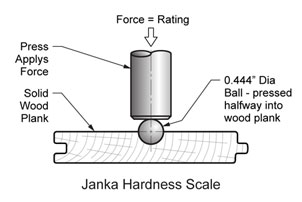
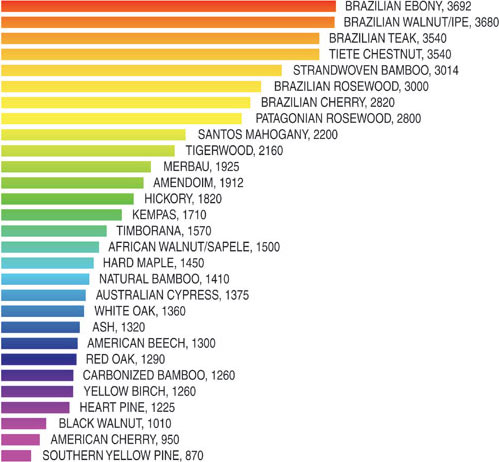
Wood species with a higher Janka rating are harder and generally more durable in residential settings. Red Oak, with a Janka rating of 1290, is commonly used as the benchmark for comparing hardwood flooring. While it is by no means the hardest wood available—examples like Brazilian Walnut (3684) and Tigerwood (1850) are significantly harder—it serves as a useful reference point to determine whether a species is above or below average in hardness.
Consulting the Janka scale is especially helpful when choosing between two species—for instance, American Cherry (950) versus Hard Maple (1450)—in homes with heavy foot traffic, pets, or multiple heavy pieces of furniture.
Janka Hardness Scale For Popular Wood Species:
Air-dry Density
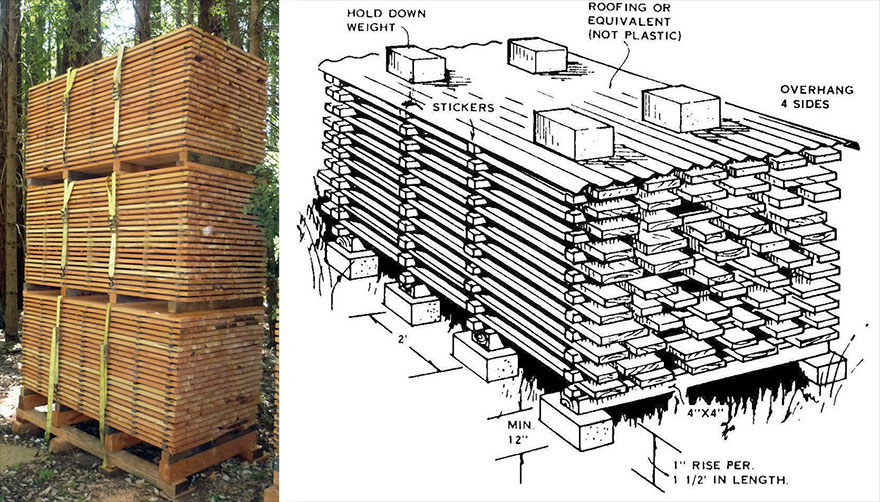
Because wood is hygroscopic—it absorbs or releases moisture until it reaches equilibrium with its surroundings—it must be dried before being manufactured into flooring. This step is crucial: green lumber contains significant moisture from its time in the forest, and if installed without proper drying, it would undergo rapid and potentially damaging dimensional changes in the typically drier indoor environment of a home.
There are two primary drying methods:
1. Air drying: The timber is stacked outdoors in a well-ventilated area and allowed to dry naturally over time.
2. Kiln drying: Moisture is removed rapidly in a controlled chamber, allowing precise targeting of final moisture content.
Due to the many variables involved in kiln-drying processes (temperature, humidity, duration), air-dry density is often used as the standard reference for comparing wood stability. Measured in grams per cubic centimeter (g/cm³), a higher air-dry density generally indicates greater dimensional stability.
Moisture Content
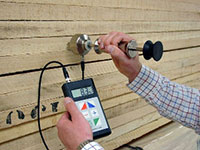
Wood’s moisture content fluctuates in response to the relative humidity of the surrounding air. When humidity rises, wood absorbs moisture and expands; when humidity drops, it releases moisture and contracts.
While these fluctuations are inevitable over the life of a floor, proper drying prior to installation significantly reduces the risk of excessive movement, warping, or gaps between boards.
Nail and Screw Difficulty
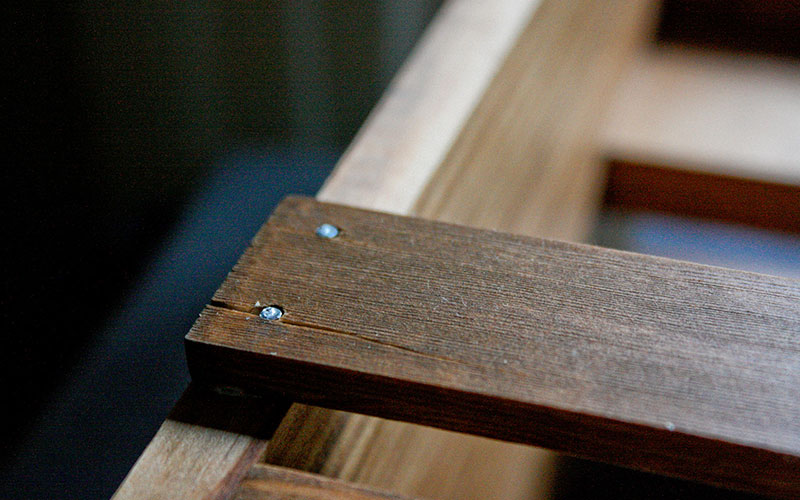
This characteristic falls under the broader category of a wood’s workability. It refers not only to how easily the wood can be penetrated by nails or screws—whether driven by a nail gun or hammer—but also to the fastener retention, or how well the fasteners hold once installed. While the Janka hardness rating is a key determinant of nail and screw difficulty, other factors such as grain texture (for example, the coarse grain of ash and oak) and density also play significant roles.
Bending Strength
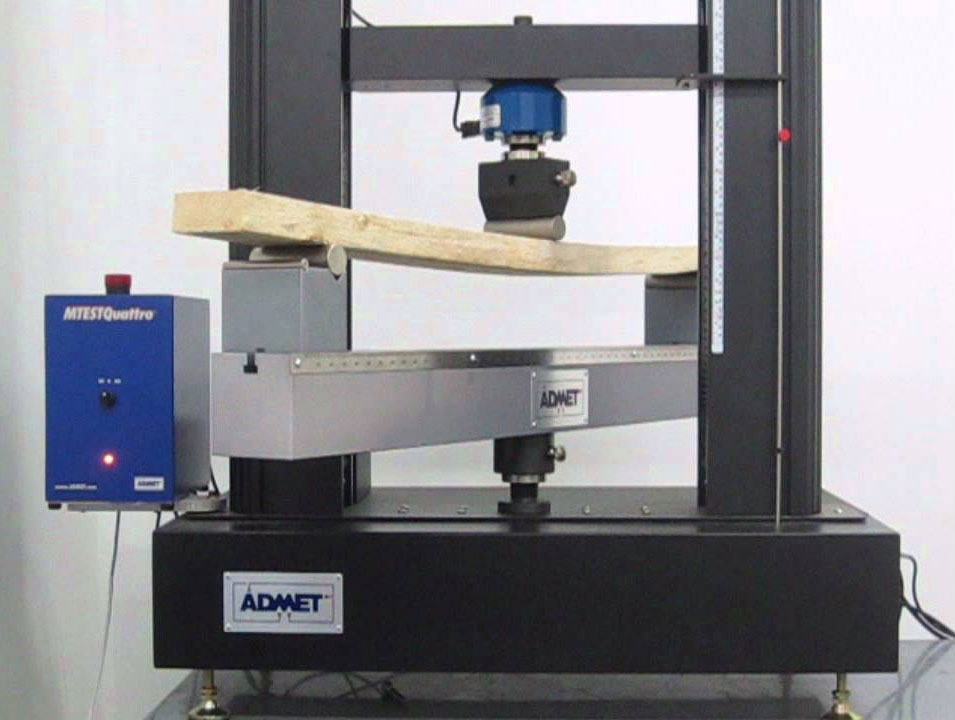
Bending strength measures a wood’s ability to withstand loads applied perpendicular to its grain. This property is less critical in flooring applications, where the subfloor helps distribute weight, but becomes essential in uses such as decking boards. When laid across beams, boards with insufficient bending strength are prone to sagging or bowing over time.
Stability
Dimensional stability is a composite rating that reflects a wood’s resistance to changes in its environment—particularly fluctuations in temperature, humidity, and moisture. All wood expands and contracts in response to these conditions, but stability indicates the degree of movement. It is expressed numerically: a lower value signifies greater stability. For example, natural bamboo (around 0.00144) is considered more dimensionally stable than true hickory (around 0.00411).