What’s the suitable range of temperature for our engineered wood and Does the room need air conditioning
Q: What’s the suitable range of temperature for our engineered wood?
For engineered wood flooring, firstly we need to distinguish between the temperature during installation/storage and the temperature/humidity during normal use. Temperature alone is not the most important factor—relative humidity (RH) is actually critical because wood responds to moisture.
Recommended indoor conditions
For LORD PARQUET engineered wood flooring, a good specification would be:
| Condition | Recommended range |
|---|---|
| Room temperature | 60–80°F (16–27°C) |
| Relative humidity | 35–55% RH |
| Ideal target | 65–75°F (18–24°C), 40–50% RH |
| Installation acclimation | At least 3–7 days under normal occupied conditions depending on product/installation method |
What matters is that the space is a controlled interior environment and is within the specified temperature/RH range when the flooring is installed and during normal occupancy.
Q: Does the room need air conditioning?
Not necessarily.
For example:
- A house in California at 72°F / 45% RH → excellent.
- A house without AC at 75°F / 50% RH → also excellent.
- A house without AC at 95°F / 80% RH → not suitable for installation or long-term flooring performance.
- A heated house at 70°F / 25% RH → temperature is fine, but humidity is too low and can cause excessive gaps/shrinkage.
The flooring should be installed and maintained in a temperature- and humidity-controlled indoor environment. Air conditioning is not required, provided that the room remains within the recommended environmental conditions.
Wood flooring can expand and contract significantly with seasonal changes.
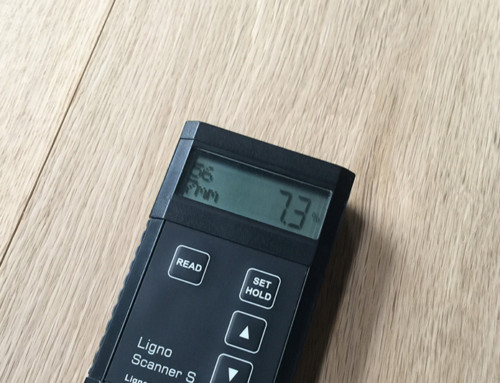
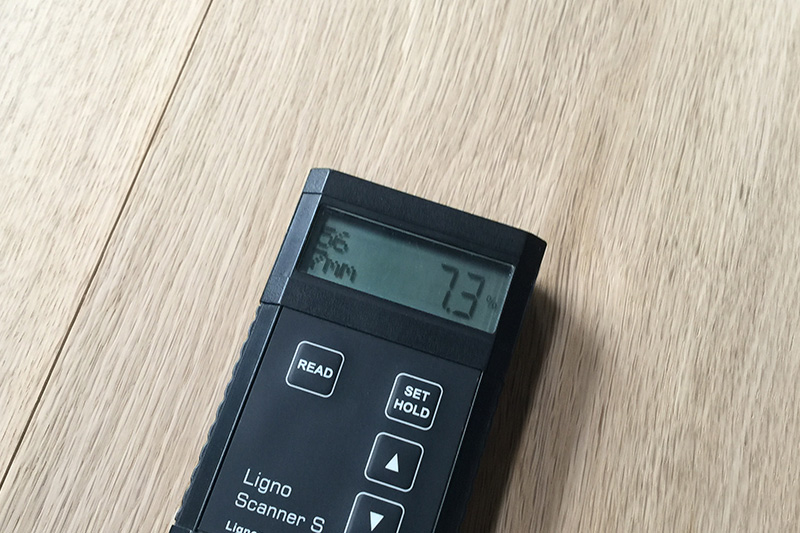
Also, for installation, the subfloor moisture content and flooring moisture content should be checked—not just room temperature and RH.
Q: Customer needs some idea, as the wood will be installed in Palm desert/spring area. Phoenix and Las Vegas too. Because some people don’t live there during hot summer.
Palm Desert, Palm Springs, Phoenix, and Las Vegas are a special case, because the concern isn’t just the temperature when people are living in the house. The bigger issue is what happens to the indoor temperature and RH when the house is left vacant during the summer.
We would not tell customers that AC must run continuously, but also would not recommend shutting the HVAC completely off in these desert climates.
What Lord Parquet recommend:
During normal occupancy:
- Temperature: 60–80°F (16–27°C)
- RH: 35–55%
- Ideal: approximately 65–75°F (18–24°C), 40–50% RH
When the home is vacant during summer:
- Keep the air-conditioning/HVAC system operating at a set temperature, rather than turning it completely off.
- I would recommend maintaining approximately 80–85°F (27–29°C) maximum indoor temperature.
- Try to maintain RH below 60%, although desert homes will often naturally be much drier.
- Use automatic HVAC controls/remote monitoring if the property will be vacant for an extended period.
The important distinction is that 85°F by itself isn’t necessarily catastrophic for engineered flooring. The problem is prolonged exposure to extreme heat combined with significant changes in moisture content, especially if the home cycles between very hot/dry conditions and heavily air-conditioned conditions.
For Palm Desert / Palm Springs / Phoenix / Las Vegas
For homes located in hot, arid climates such as Palm Desert, Palm Springs, Phoenix and Las Vegas, the HVAC system should not be completely shut off during extended periods of vacancy in summer. Maintain indoor environmental conditions as consistently as practical, with a recommended maximum indoor temperature of approximately 85°F (29°C) and relative humidity below 60%.
The flooring should not be exposed to uncontrolled outdoor conditions, direct sunlight, or prolonged extreme heat. Window coverings should be used to minimize direct solar exposure, particularly in rooms with large south- or west-facing windows.
Imagine a vacant Palm Desert house:
Normal occupied condition
72°F / 40% RH
Then the owner leaves for three months and turns off AC:
110–125°F outside
potentially 90–110°F+ inside
The flooring itself can become substantially hotter than the nominal room temperature, especially near windows. At the same time, the wood becomes extremely dry.
Then the owner comes back and turns the AC on:
105°F → 72°F very quickly
That is a much more stressful environment for wood than a house that stays reasonably conditioned.
We would also add a solar-exposure warning
This is particularly important for your desert-market customers.
Even if the room temperature is acceptable, direct sunlight through large windows can heat the floor significantly above room temperature and can cause:
- color variation/fading
- localized expansion/shrinkage
- checking or finish stress
- gaps between boards
- cupping/crowning in extreme conditions
So for vacant homes, keeping blinds/shades closed is a very good recommendation.
Extended vacancy in extreme climates:
HVAC should remain operational; do not allow indoor temperatures to become excessively high, with ~85°F (29°C) as a practical recommended upper target.